A rebrand is one of the riskiest moves a startup can make. If you rebrand a startup too early, you waste money building recognition twice. If you wait too long, an outdated brand holds you back. Done well, though, a rebrand can give your business new energy.
This guide explains when to rebrand and how to do it without losing customers.
Signs you need to rebrand your startup
Some signs are hard to miss. For example:
- your brand no longer fits your audience after a pivot
- customers are confused about what you do
- competitors look and sound just like you
- your brand feels dated next to newer players
- you are moving into new markets where your brand doesn’t work
Keep in mind that a refresh is different from a rebrand. A refresh updates your look while keeping recognition. A rebrand starts again.
When to rebrand a startup
Timing matters. In general, wait until you have product-market fit and real customer demand. Before that, your money is better spent on the product. However, don’t wait if your brand is actively hurting growth. In that case, delay can cost more than the rebrand itself.
Weigh the risks and rewards
A rebrand has risks. You may lose some recognition, confuse customers and see a short dip in traffic. On the other hand, the rewards can include a clearer position, stronger pricing and easier sales. If your current brand holds you back more than a rebrand would cost, it is worth doing.
Audit what you already have
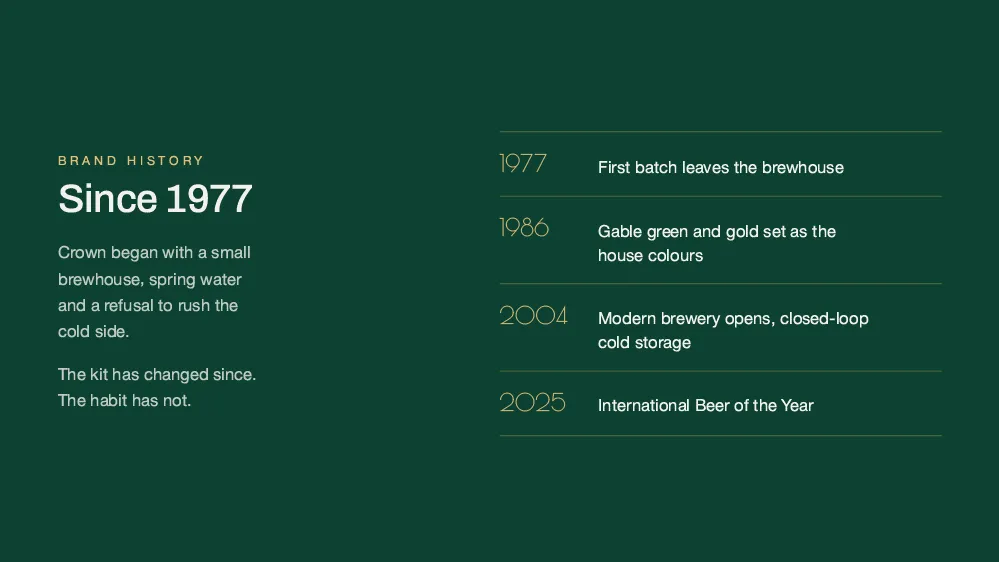
Before you change anything, look at what is working. Which parts of your brand do customers recognize and like? Often, you don’t need to change everything. For example, Crown kept its 1977 crest and built a modern system around it.

Define your new position first
A rebrand starts with strategy, not design. Who are you now? Who do you serve? What makes you different? If you can’t answer these clearly, you aren’t ready to rebrand yet.
Test with real customers
Next, test your new direction with existing and target customers. Does it explain your position clearly? Does it appeal to the right people? Their feedback helps you fix problems before launch.
Plan the rollout of your startup rebrand
Sudden changes can shock customers. So consider a phased rollout, a soft launch with one group first, or an announcement ahead of time. Most importantly, explain why you are changing. People accept change more easily when they understand the reason.
Update every touchpoint
A rebrand only works if it is consistent. That means your website, social media, emails, pitch decks, business cards, support pages, ads and packaging. A simple checklist helps make sure nothing is missed.
Protect your SEO when you rebrand a startup
If your URLs or domain change, set up 301 redirects from every old page to its new page. Google’s guide to moving a site with URL changes explains the steps. Then update your sitemap and keep an eye on rankings during the move.
Tell your customers
Let existing customers know before the launch. Explain what is changing, what stays the same and how it helps them. Clear, early communication builds goodwill and reduces churn.
Track the results
After launch, monitor traffic, conversions, engagement, feedback and search rankings. A short dip is normal while people adjust. However, if results stay down for several months, review what isn’t working.
Conclusion: rebrand your startup for strategy, not boredom
In short, only rebrand a startup when your strategy demands it. Plan carefully, test with customers, communicate clearly and track the results. For related advice, read about building a startup brand identity and startup logo design, or talk to Spaark about a rebrand.
Related reading
Next, keep reading with these related Spaark guides:
- Why professional branding for startups matters: how a strong brand builds trust and helps you raise funding.
- How to write a design brief: seven steps and a free template.
- Global startup branding: one brand, adapted for many markets.
Frequently asked questions
How long does it take to rebrand a startup?
Usually three to six months for research, design and planning, plus time to roll it out.
Will we lose customers when we rebrand?
You might lose a few. However, clear communication keeps most customers on board.
Should we change our domain when we rebrand?
Only if you must. A domain change adds SEO risk, so use redirects carefully if you do.
When should a startup not rebrand?
Avoid it before product-market fit, during a major launch, during fundraising or when your current brand is working well.